FOR IMMEDIATE RELEASE
North Carolina State University has been selected by the National Oceanic and Atmospheric Administration (NOAA) to lead a new regional initiative helping communities across the South Atlantic prepare for extreme weather and disasters.
NOAA awarded NC State $1.2 million to launch the one-year South Atlantic Regional Integrated Sciences and Assessments (RISA) program. The program builds on five years of work through the Carolinas RISA and expands the partnership across North Carolina, South Carolina, and Georgia. Led by NC State, the interdisciplinary team will work with state and local governments, communities, and other decision-makers to translate weather and climate science into practical strategies for preparedness, recovery, and long-term resilience.
“Communities across the South Atlantic are already making difficult decisions about how to prepare for flooding, extreme heat, hurricanes, drought, wildfire, and other hazards,” said Dr. Jennifer Runkle, principal investigator of the South Atlantic RISA and a senior research scientist at NC State’s North Carolina Institute for Climate Studies (NCICS). “Our goal is to make sure they have not only the best available science but also the partnerships, tools, and capacity to put that information into action.”
Communities across the region increasingly face complex and interconnected hazards that can simultaneously disrupt transportation, housing, healthcare, businesses, and other essential services. The South Atlantic RISA team will study flooding, extreme temperatures, drought, wildfire, and tropical cyclones, including compound and cascading events, while developing new approaches for translating hazard information into actionable tools for decision-makers.
Research will address several pressing resilience challenges across the region. The team will examine how extreme weather affects housing affordability, renters, and pathways to homeownership; work with communities and public service providers to strengthen infrastructure and heat resilience; and use Hurricane Helene as a case study to understand how disasters affect health, infrastructure, economic conditions, and household well-being over time. The program will also examine cascading post-disaster hazards, including heightened wildfire risk.
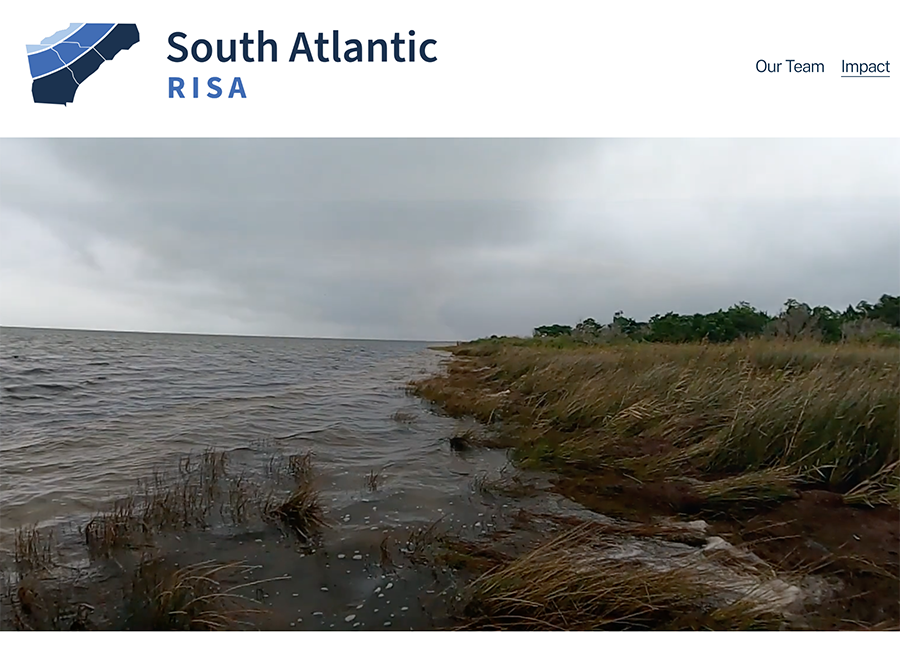
You can learn more about the South Atlantic Regional Integrated Sciences and Assessment Program at https://southatlanticrisa.com/
“Extreme weather doesn’t affect infrastructure in isolation,” said Dr. Katherine Anarde, assistant professor in NC State’s College of Engineering. “Roads, water systems, housing, and other critical infrastructure are deeply interconnected with the communities they serve. Through the South Atlantic RISA, we can work with partners to better understand those connections and develop practical strategies that help communities prepare for future extremes and recover more resiliently when disasters occur.”
A defining feature of the program is its emphasis on co-producing science with the people who will use it. Researchers will work with local governments, emergency managers, public health practitioners, businesses, and community organizations through listening sessions, workshops, training, and technical assistance to ensure that new tools and information respond to real-world needs.
“The value of RISA is in the relationships that connect science to action,” said Dr. Jared Bowden, director of the North Carolina State Climate Office. “We aren’t simply producing climate information and handing it to communities. We work alongside partners to understand the decisions they face, co-develop useful tools and solutions, and build the capacity to put science into practice.”
A Regional Research Partnership
NC State will lead a multidisciplinary team spanning the three-state region. NC State participants include researchers from NCICS, the State Climate Office, and College of Engineering, working with collaborators at the University of North Carolina at Chapel Hill, Furman University, Georgia State University, the University of Georgia, and the North Carolina Museum of Life and Science. The team brings expertise in climate and atmospheric science, engineering and hydrology, public health, economics, social science, disaster recovery, and community engagement.
The researchers will work with an extensive regional network of state and local governments, NOAA offices, emergency managers, public health organizations, Tribal partners, businesses, and community organizations. Partners include the North Carolina Department of Environmental Quality, North Carolina Department of Transportation, South Carolina Office of Resilience, Georgia Department of Transportation, Atlanta Regional Commission, NOAA’s National Weather Service, and Eastern Band of Cherokee Indians, among others.
The South Atlantic RISA aims to help communities move from understanding risk to taking action, strengthening both the information and the regional capacity needed to prepare for future extreme weather and recover from disasters.
Contact: Dr. Jennifer Runkle, jrrunkle@ncsu.edu
Program website: https://southatlanticrisa.com