Inspire. Advance. Engage.

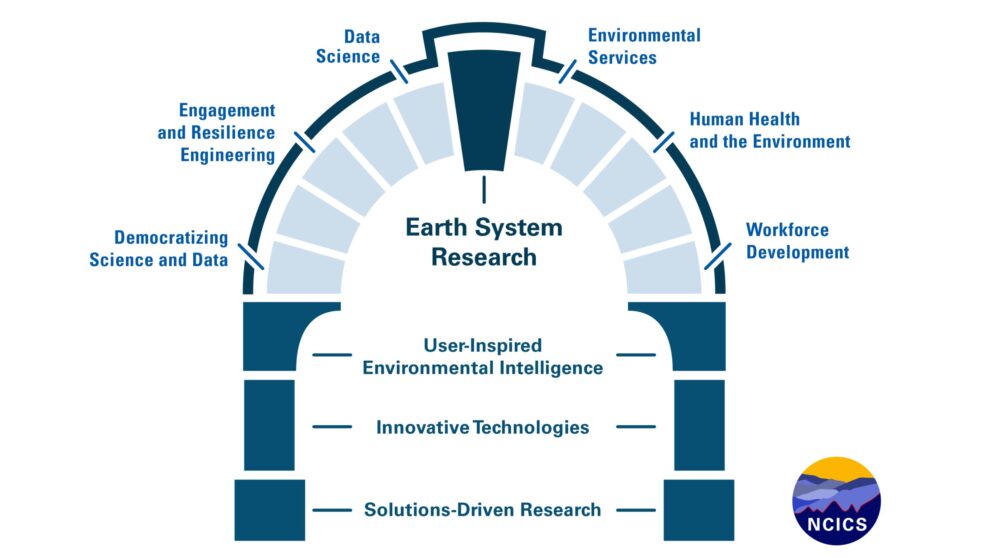
NCICS:

  • inspires cutting-edge research and collaboration.
  • advances understanding of the current and future state of the climate.
  • engages with business, academia, government, and the public to enhance decision making.

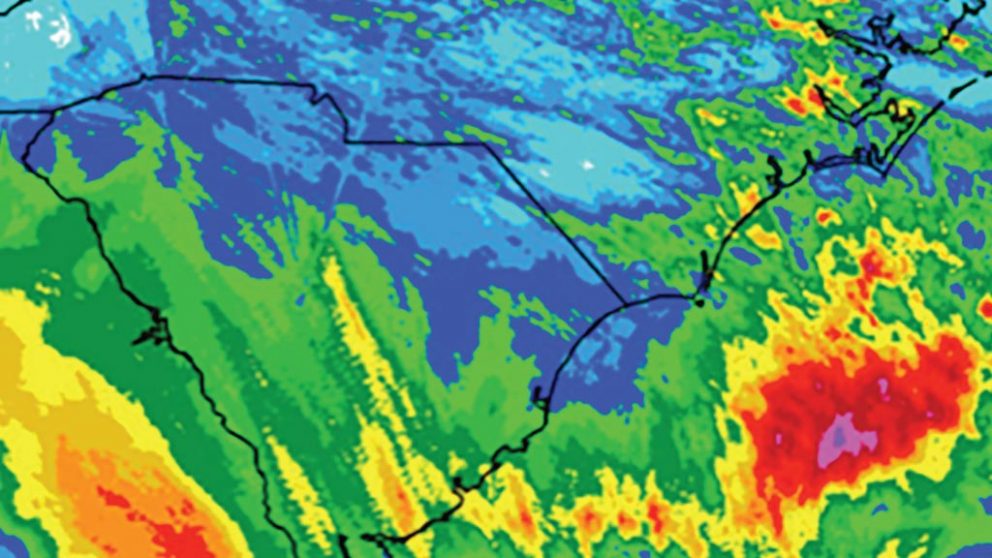
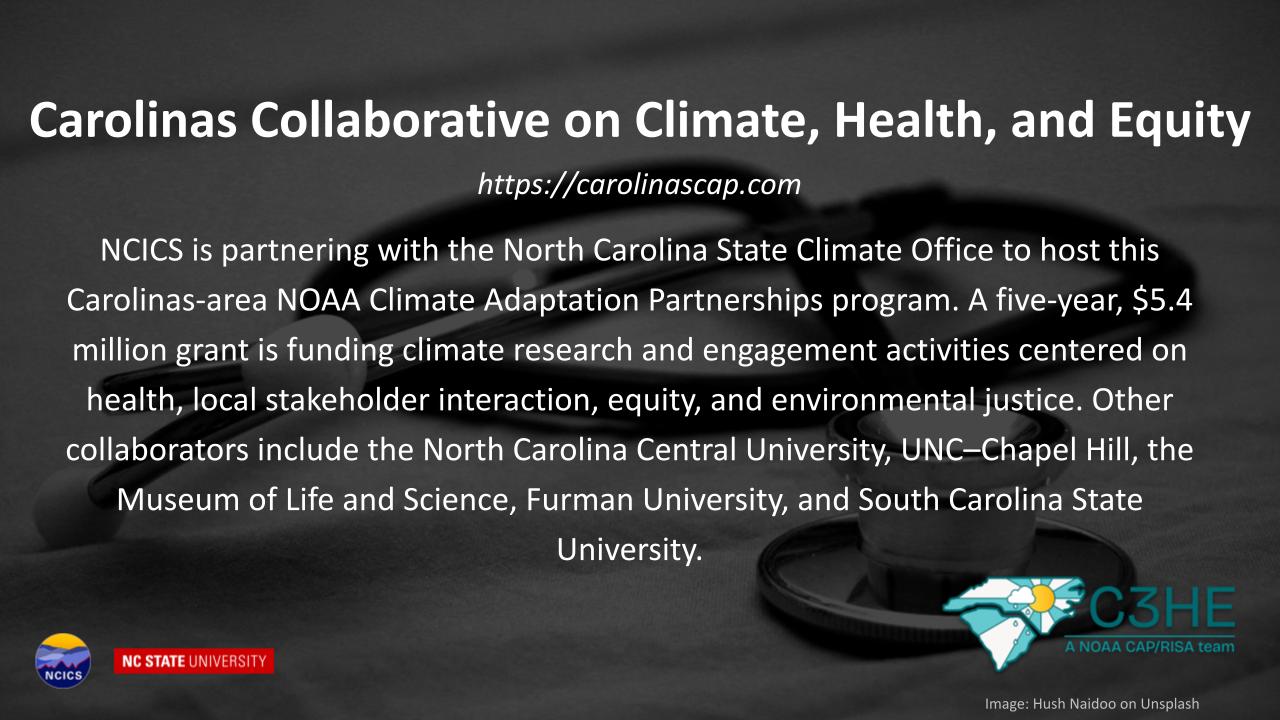
Grant Will Fund Climate Resilience Strategies for Frontline Communities in the Carolinas

North Carolina State University will lead a multi-institutional effort to develop climate resilience solutions in frontline communities in the Carolinas, thanks to a five-year, $5 million dollar grant from the National Oceanic and Atmospheric Administration (NOAA). Frontline communities refer to communities who experience the first and worst impacts of the climate crisis.

More…

NCICS
Inspire. Advance. Engage
CISESS
TSU
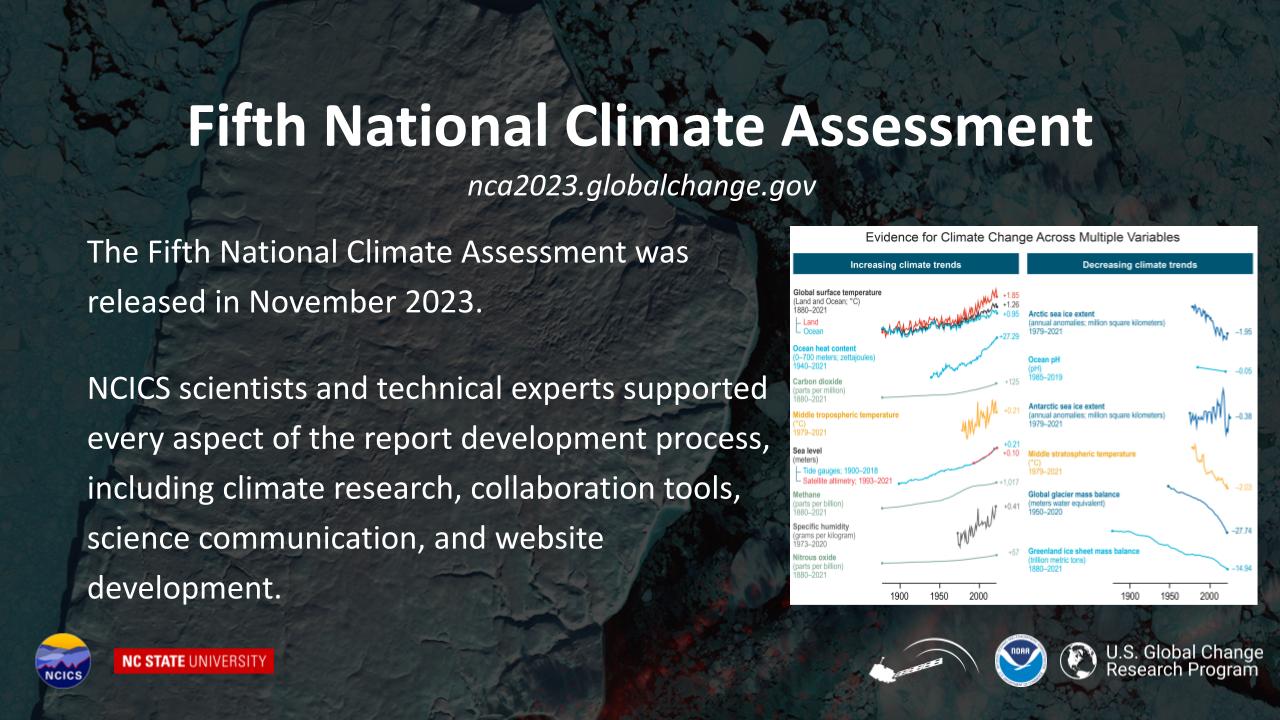
Fifth National Climate  Assessment
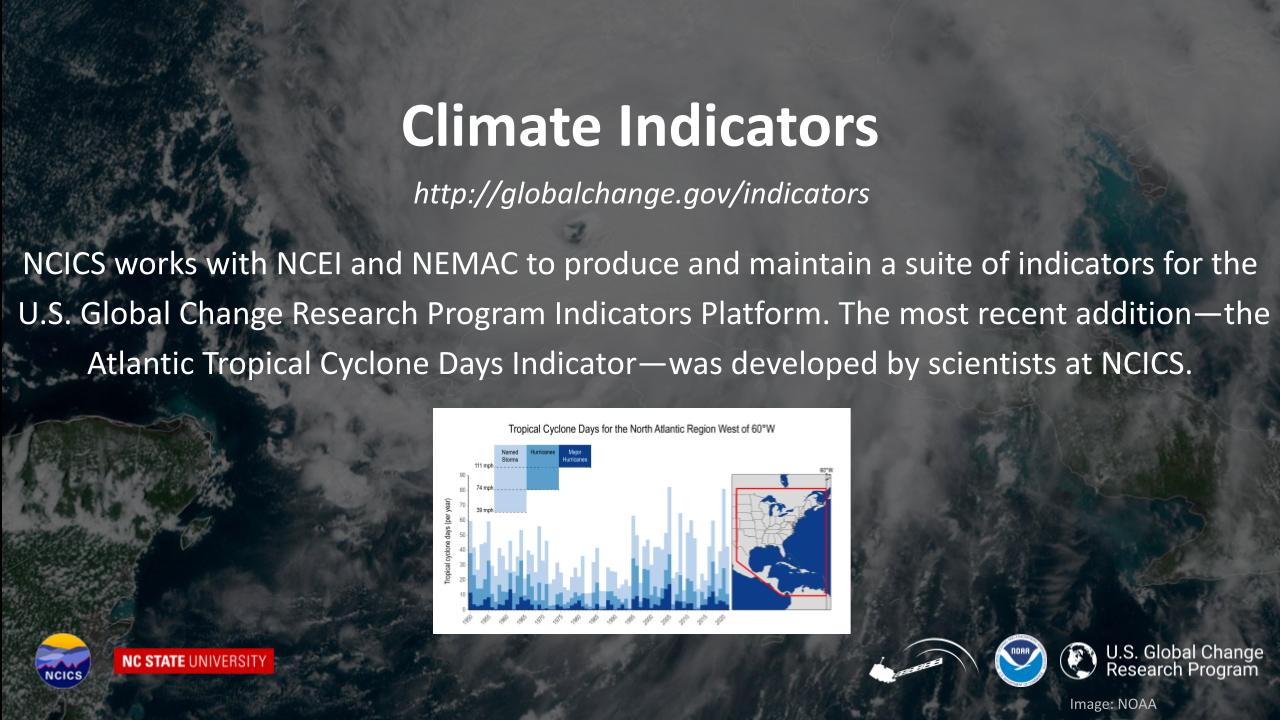
Indicators
Indicators
NC Climate Science Report
CDRs
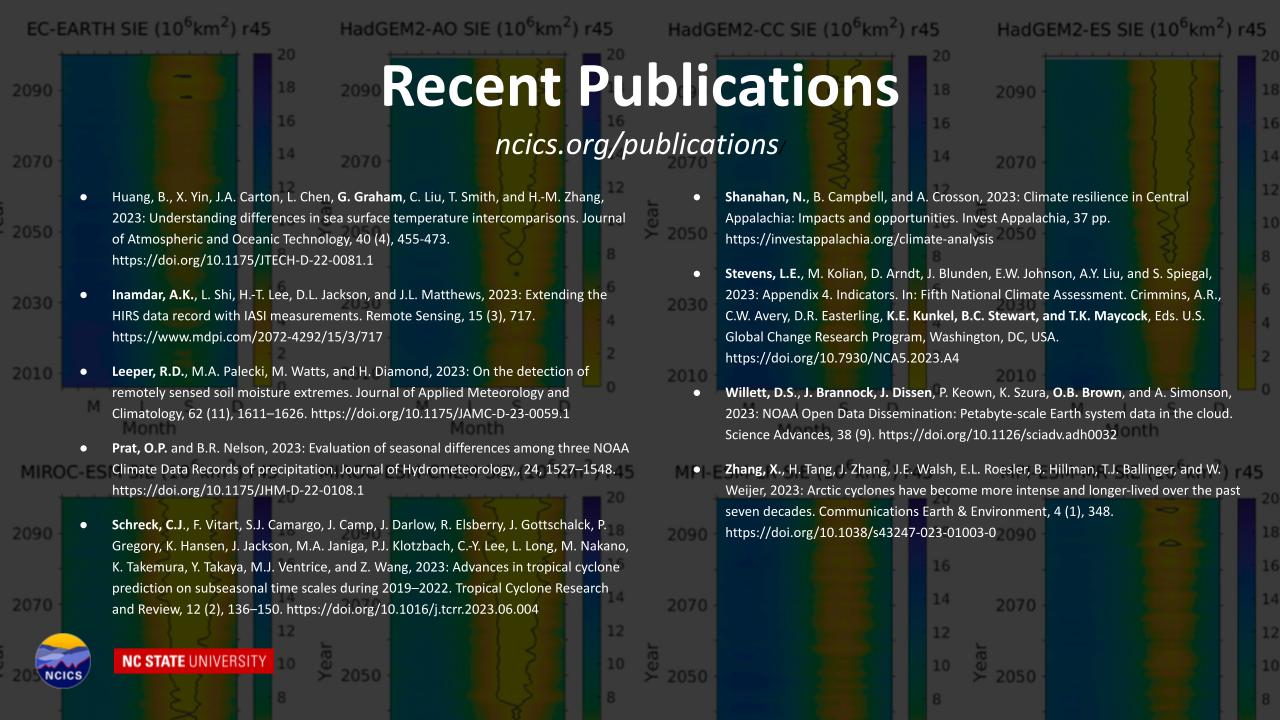
Artic Sea Ice
Environmental Data Stewardship
Big Data Project
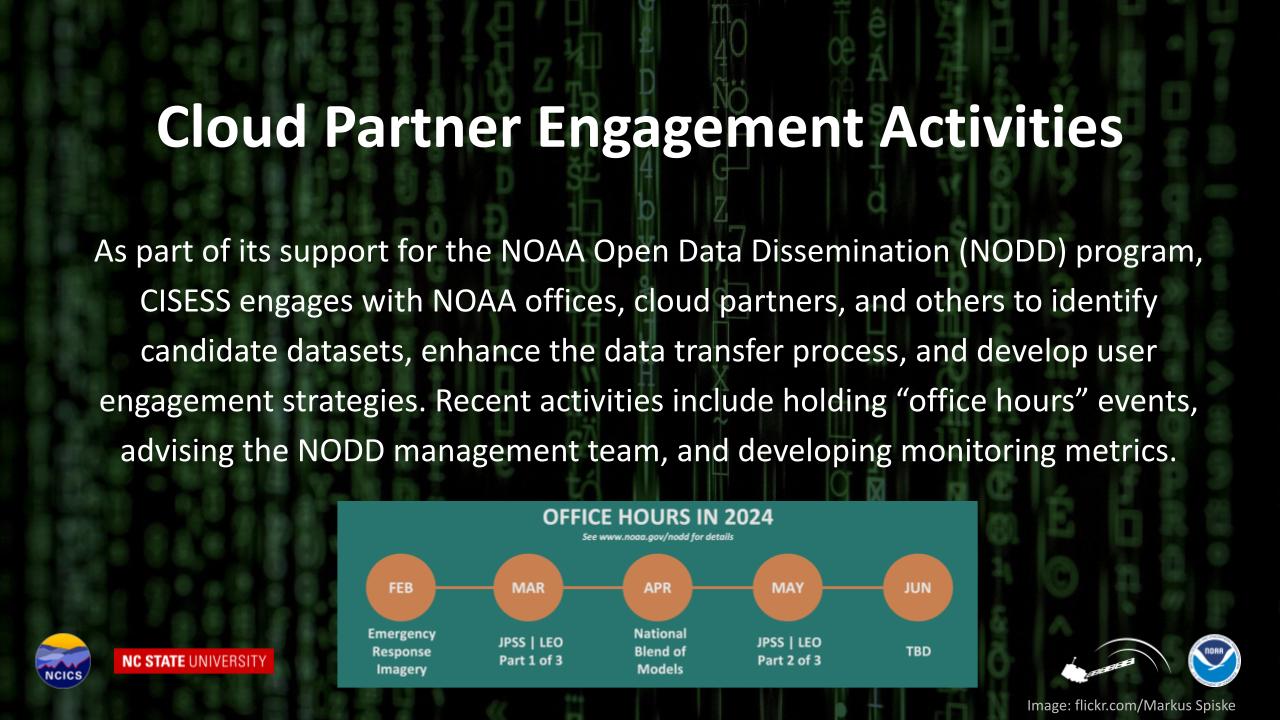
Open Access NEXRAD Rada Data
Data Stewardship
SERDP
US-India Partnership
Outreach
Climate and Health Research
NCICS in the Media
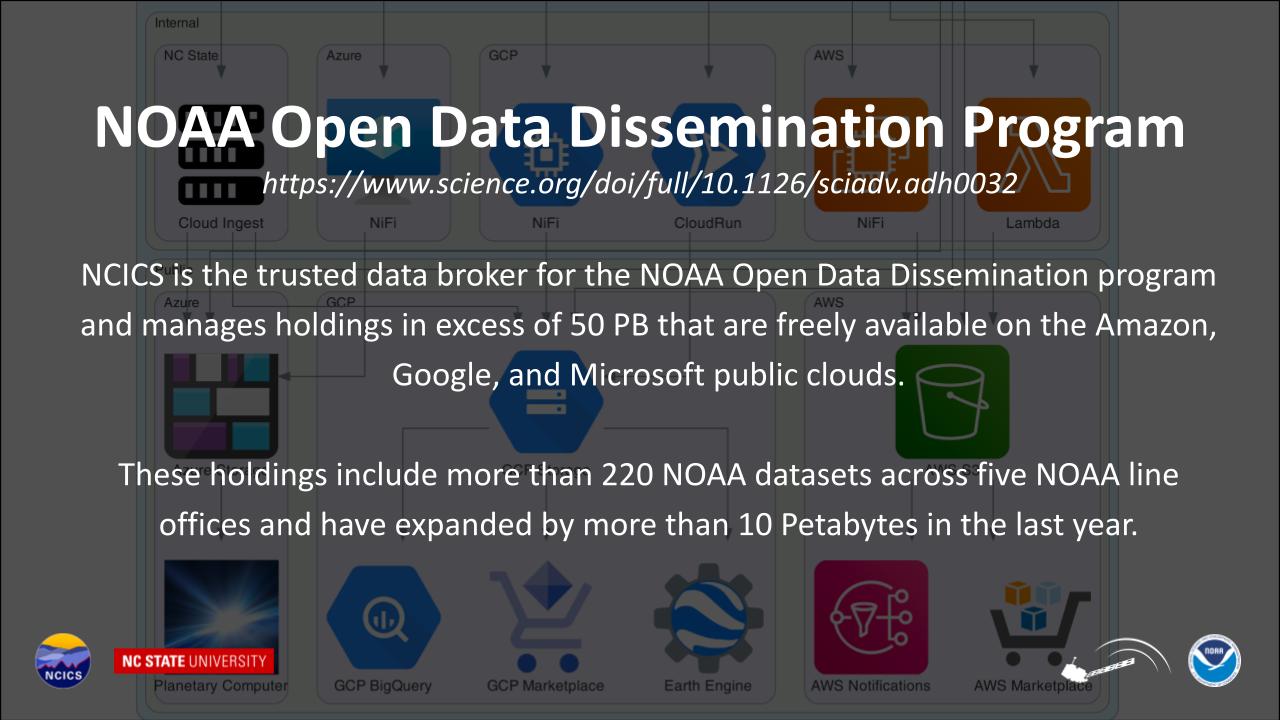
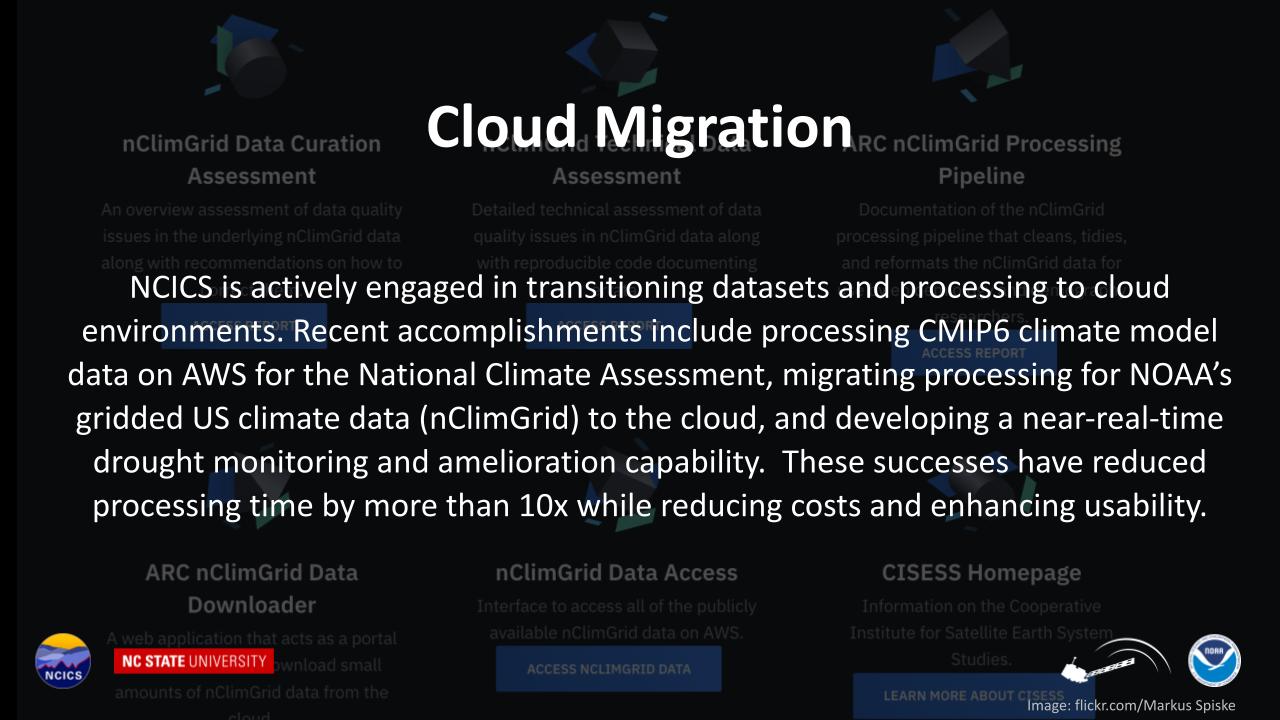
Data to the Cloud
Professional and Community Leadership
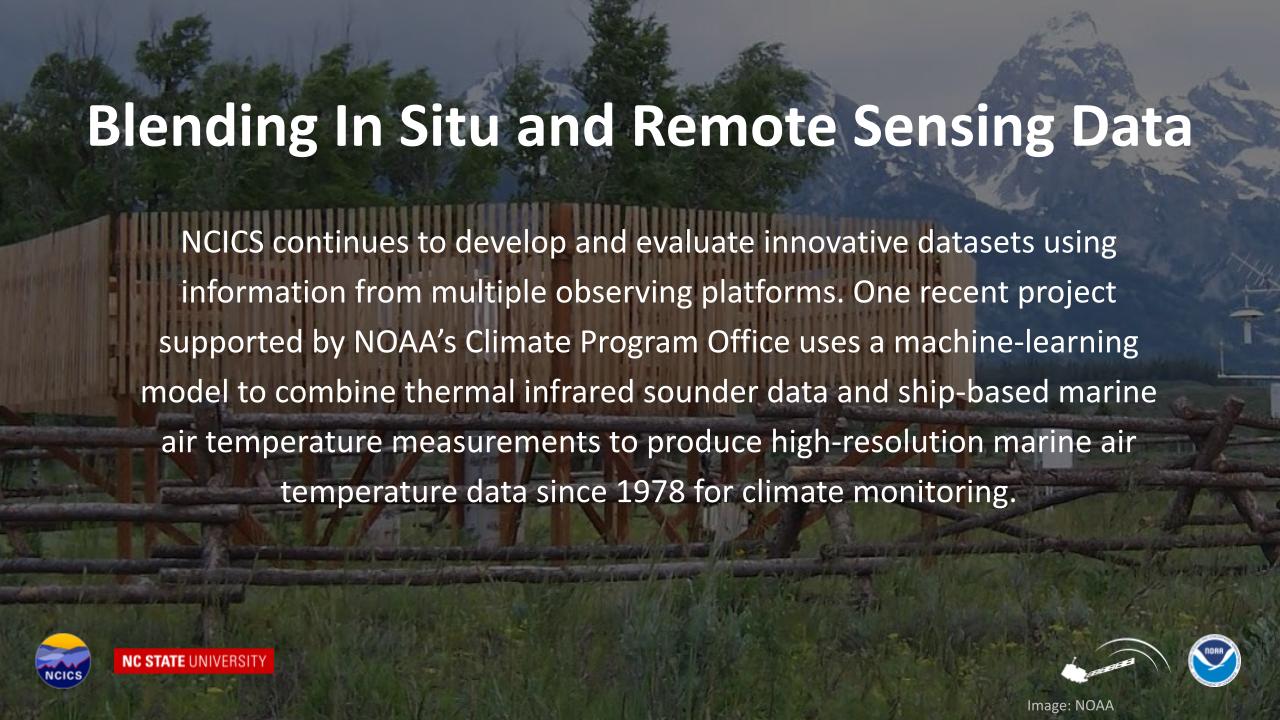
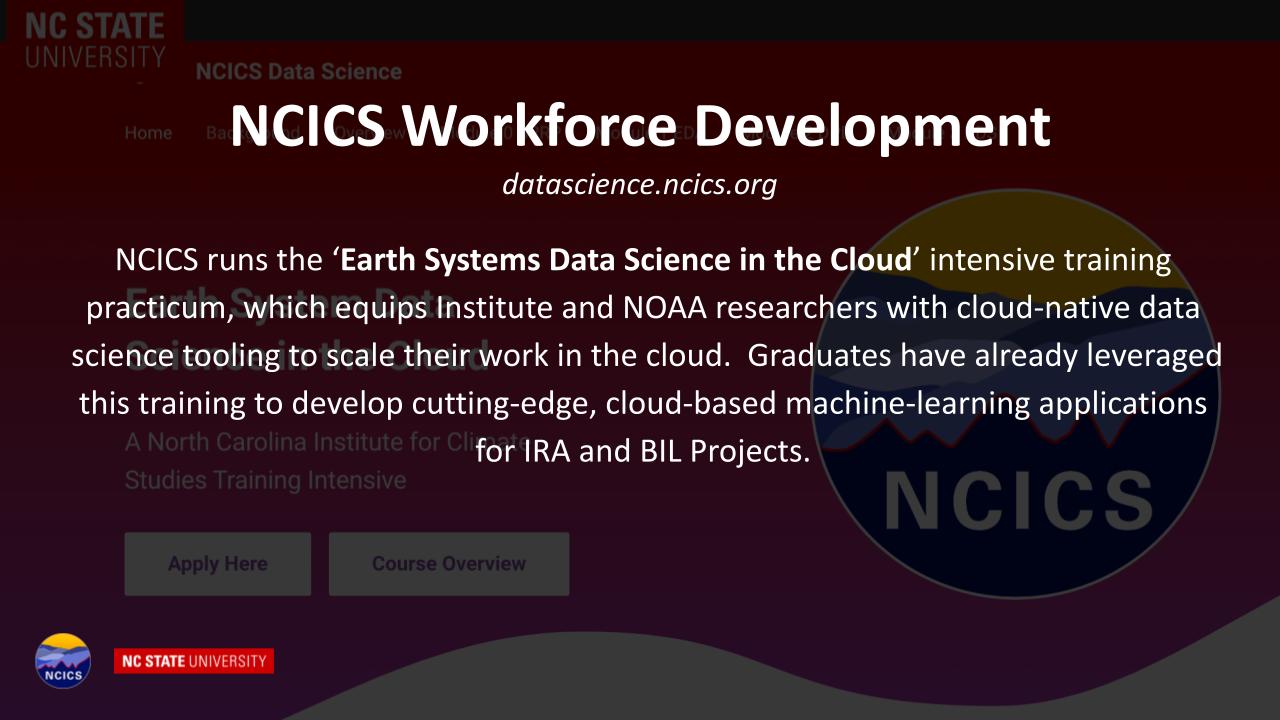
Artificial   Intelligence/Machine Learning
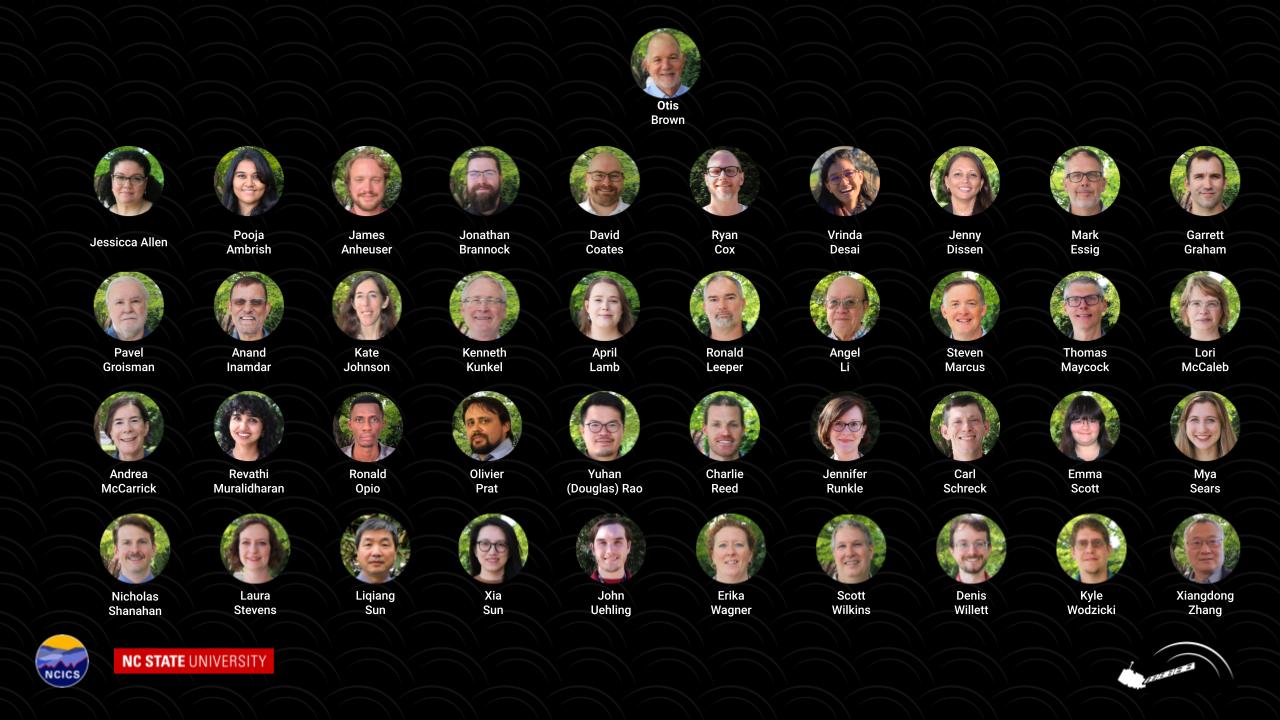
NCICS Staff

RECENT POSTS

Comments Box SVG iconsUsed for the like, share, comment, and reaction icons

NCICS activities at the Fall Meeting of the American Geophysical Union (AGU) are underway! Sessions today include an introduction to the new National Oceanic and Atmospheric Administration (NOAA) Center for Artificial Intelligence, an operational near-real-time drought monitoring framework at NOAA National Centers for Environmental Information, and using machine learning to identify extreme precipitation events in climate model output. See our website for a full list of NCICS sessions at #AGU21: ncics.org/news/ncics-at-agu-2021/ ... See MoreSee Less

NCICS activities at the Fall Meeting of the American Geophysical Union (AGU) are underway! Sessions today include an introduction to the new National Oceanic and Atmospheric Administration (NOAA) Center for Artificial Intelligence, an operational near-real-time drought monitoring framework at NOAA National Centers for Environmental Information, and using machine learning to identify extreme precipitation events in climate model output. See our website for a full list of NCICS sessions at #AGU21: https://ncics.org/news/ncics-at-agu-2021/
Load more